
11000L

The water footprint of cotton clothing

11000L

About 11,000 litres of water to produce just one kilogram of cotton — and around 2,700 litres for a single T-shirt. Fast fashion has a massive, invisible footprint.

Source: WWF Canada, Water: The Stuff of Everything. An approximate water footprint, not just water drawn from a tap.

Problem 1 · The scale

More clothes.
Worn less.

> 100 bn

clothing units sold worldwide in 2015. This is a historical sales figure, not a count of current annual production.

Source: Ellen MacArthur Foundation (2017), Figure 1

≈ 2×

the increase in global clothing sales between 2000 and 2015, according to the report’s historical chart.

Source: Ellen MacArthur Foundation (2017), Figure 1

< 1 %

of material used to produce clothing was recycled into new clothing, according to the report. Other flows include lower-value recycling, not only disposal.

Source: Ellen MacArthur Foundation (2017), p. 20 / Figure 3

Problem 2 · Water

≈ 2,700 L

a cotton T-shirt · estimate

Source: Chapagain et al. (2005), Table 4.4

One shirt.
A hidden footprint.

A study estimated 2,720 litres for a 250 g cotton T-shirt, often rounded to 2,700 litres. This production footprint includes rainwater consumed by the crop, surface and groundwater consumed, and a calculated volume needed to dilute pollution.

Source: UNESCO-IHE, The water footprint of cotton consumption (2005), Table 4.4

It is not all irrigation water, and the pollution-dilution volume is not water physically withdrawn. This historical estimate covers production, not washing at home. Cotton origin, garment weight and the calculation method all change the result.

Problem 3 · Polyester & microplastics

Plastic you can’t see.

If cotton uses massive amounts of water, what about the rest? Most cheap clothing today isn’t cotton. It is polyester — a plastic fibre. Unlike cotton, polyester does not biodegrade, and every wash in a machine can release tiny plastic fibres that pass through wastewater treatment into rivers and oceans.

59 %

of global fibre production was polyester in 2024 — the most widely produced fibre, most of it made from fossil fuels.

Source: Textile Exchange, Materials Market Report 2025

≈ 35 %

of the microplastics estimated to enter the oceans directly are thought to come from washing synthetic textiles such as polyester.

Source: Boucher & Friot, IUCN (2017)

≈ 0.5 Mt

of plastic microfibres are estimated to leak into the oceans every year from washing plastic-based textiles.

Source: Ellen MacArthur Foundation (2017), p. 37

These are estimates from global modelling, not measurements of any single garment. How much a garment sheds depends on fabric type, washing machine and detergent, and researchers are still working on standard ways to measure it.

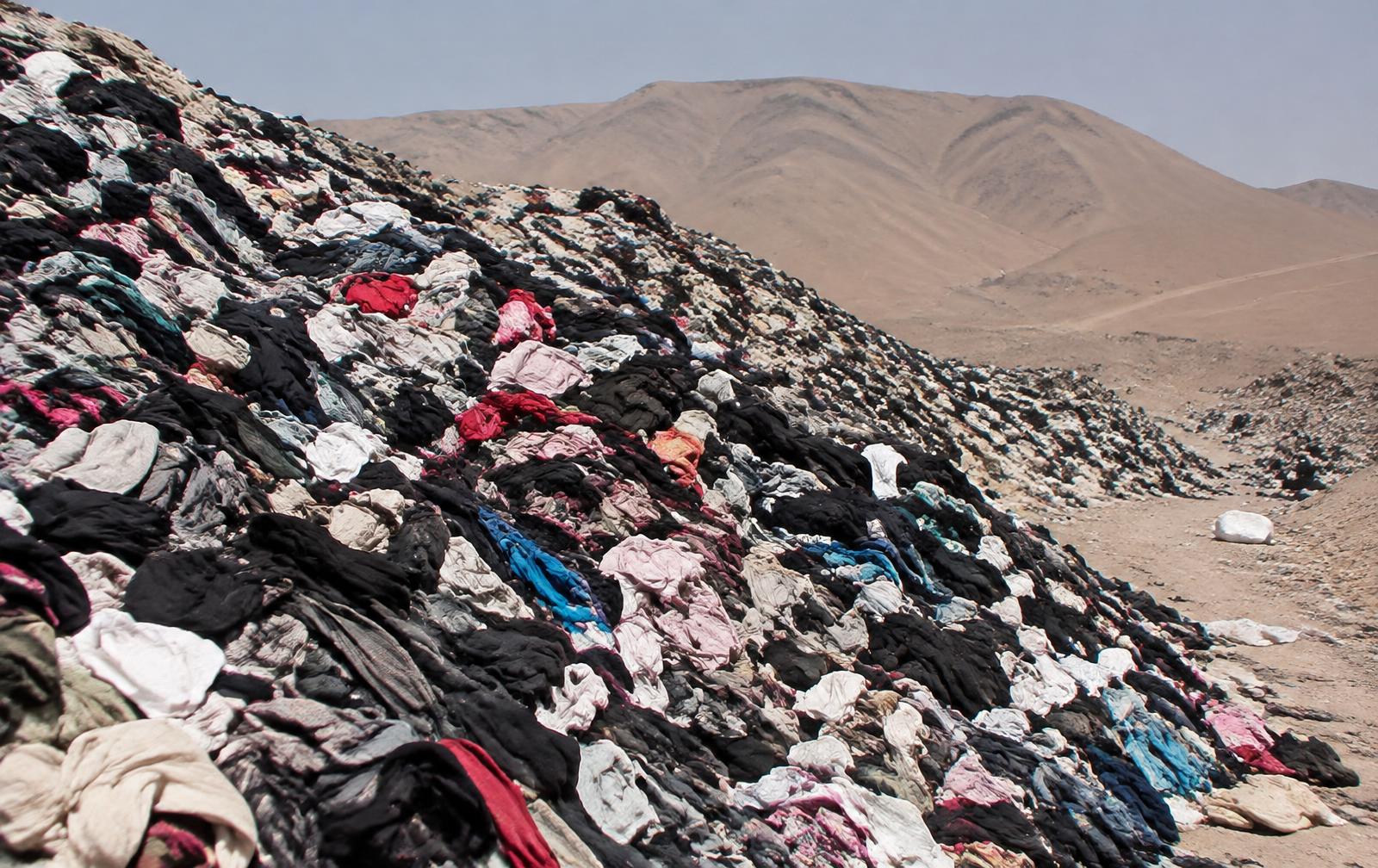
Mountain of discarded clothing in the Atacama Desert

Problem 4 · Where it ends

Out of sight.
Not gone.

Atacama Desert, Chile

At least 39,000 tonnes

AFP reported that around 59,000 tonnes of clothing arrived in Iquique annually, with at least 39,000 tonnes ending up in desert dumps. These are figures from its 2021 reporting, not a verified annual rate today.

Source: AFP / France 24, 8 November 2021

Clothes that cannot be resold accumulate near Alto Hospicio. Synthetic fibres can persist for a long time; burning the piles creates pollution that affects nearby communities.

Kantamanto, Accra, Ghana

15 million garments a week

The Or Foundation estimates that Kantamanto receives this volume of clothing. It is an estimate for this second-hand market, not an official count of imports across Ghana.

Source: The Or Foundation, Stop Waste Colonialism

The same organisation estimates that 40% of the average bale leaves the market as waste. Discarded textiles put pressure on local waste systems, and some reach waterways and beaches.

Source: The Or Foundation, field-research-based estimate

"Donating" clothes doesn't make them disappear. It often just moves the problem to the Global South.

Quiz

How big is your fashion footprint?

Choose the answer that fits you best. The further right, the higher the CO₂ and water footprint.

Question 1 of 6

How many new garments do you buy per year?

Choose an answer to continue.

This is a self-check, not a measurement. It compares your habits with the main drivers of clothing's water and CO₂ footprint: how much is produced, how long it is worn and how it is cared for.

Source: Ellen MacArthur Foundation (2017)

So what can we do?→